
Stamp card for cafés, bakeries & shops: how to design a loyalty program that works
A coffee a day, bread on Saturday, a haircut every few weeks: regular customers are worth their weight in gold to a small business. A stamp card is the simplest loyalty program there is – everyone understands it at once. To make it work, though, a few decisions matter: how many stamps, which reward, paper or phone, and how to stop people from cheating. This guide goes through them one by one.
Why a stamp card?
A stamp card gives people a concrete reason to buy from you next time rather than from the shop next door. It can be explained in one sentence, needs no points tables and no membership. And on every visit it shows how close the reward already is.
How many stamps make sense?
The right number depends on how often your customers come. The reward should be reachable within a period people can still picture – otherwise the card gets forgotten.
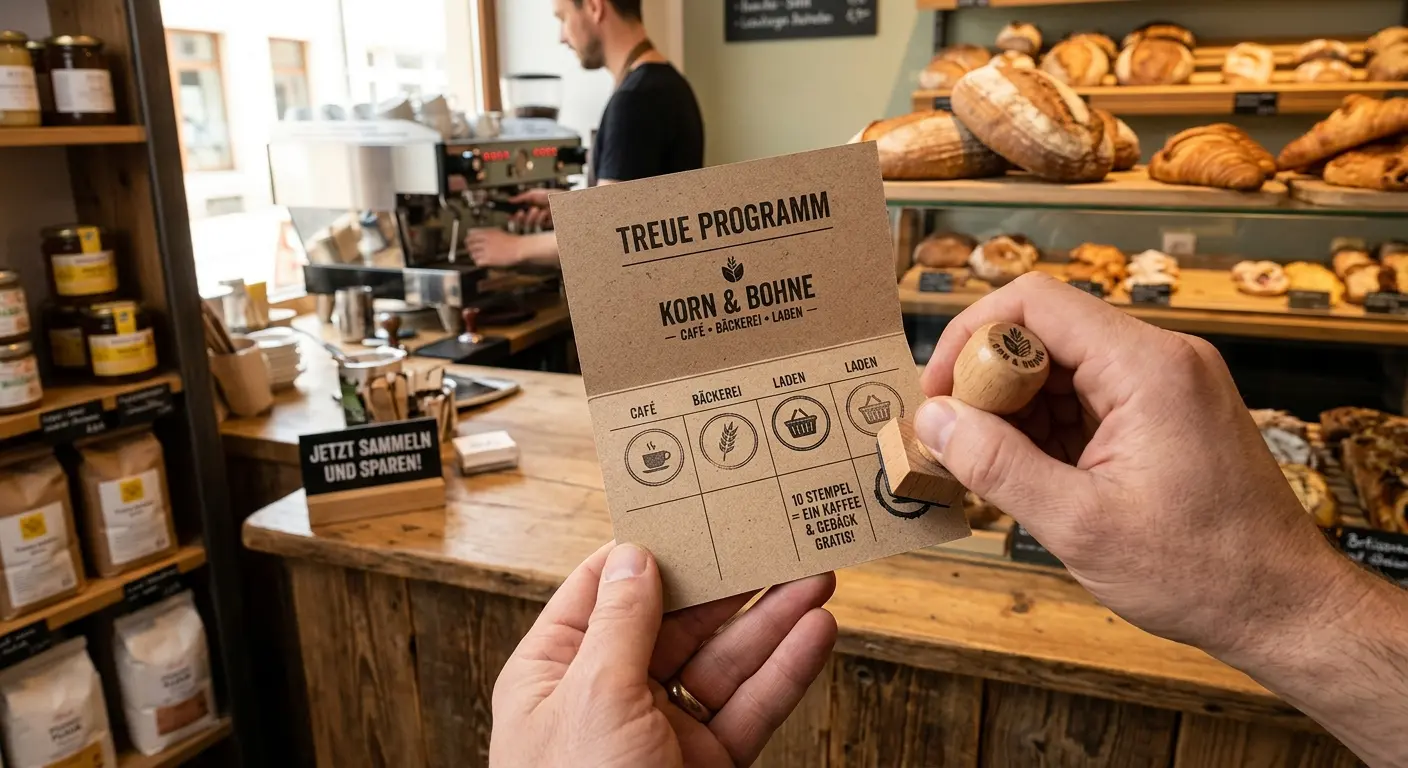
- Daily purchase (coffee, croissant, lunch): around 8 to 12 boxes. Someone who comes every weekday fills a ten-box card in two weeks.
- Weekly purchase (weekend bread, takeaway): around 6 to 10 boxes.
- Infrequent visits (hairdresser, beauty, bike service): around 4 to 6 boxes. With several weeks between visits, a ten-box card would otherwise take more than a year.
A simple trick: give one or two stamps right away on the first visit. A card that has already been started feels like a head start, and the way to the reward seems shorter.
Which reward?
The reward is the promise of the card. A few principles help you choose:
- Your own product rather than a discount: “Your tenth coffee is on us” is more tangible than a discount on your next purchase. And your own product usually costs you less than it sells for.
- Matching the purchase: people collecting coffee stamps are happy with coffee. A reward from another part of your range can spark curiosity, though – such as a slice of cake after ten coffees.
- Clearly worded: “1 coffee of your choice” leaves less room for discussion than “a drink”. Say whether specialities or large sizes are excluded.
- Short terms: for example “1 stamp per coffee, not combinable with other offers”. Nobody reads more than two or three rules.
Paper or digital?
Both have their place. An honest comparison:
Paper card
- For: cheap, ready immediately, everyone knows it.
- Against: it gets lost, stays at home or ends up in the washing machine. A similar stamp is easy to get hold of. And you never know how many cards are in circulation or how often rewards are redeemed.
Card on the phone
- For: the phone is always there. If the card is stored on a server, it is not lost with the phone, and you can see how many stamps and rewards add up.
- Against: your customers need a smartphone, and your team has to learn the routine once. An app to download is an extra hurdle – a card that runs in the browser is simpler.
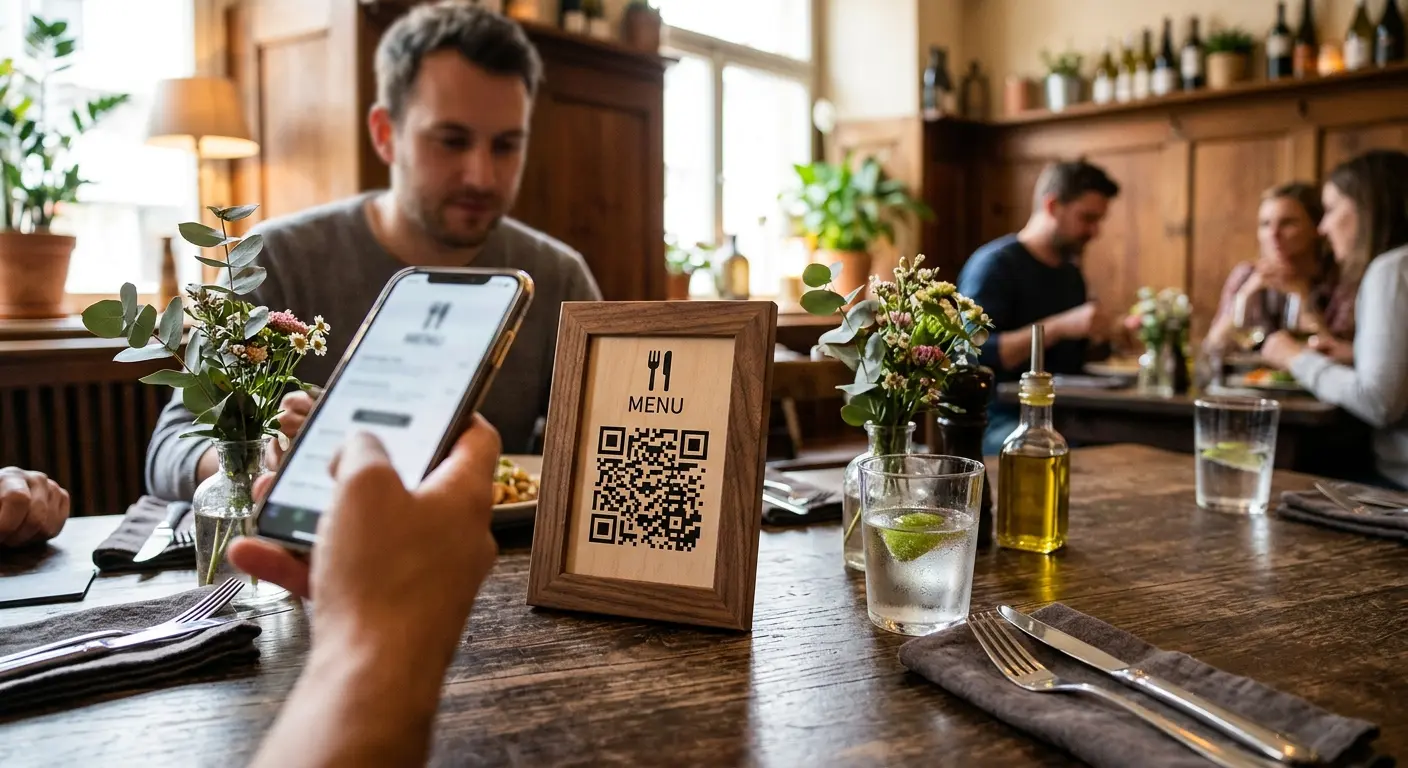
With QRown, for example, the guest scans a QR code at the counter and the card opens straight in the browser, with no app and no sign-up. A stamp is only added once staff confirm with their PIN. The page on the QRown loyalty card shows how it works in detail.
If you switch from paper to phone, carry over the stamps from the old cards. In QRown you add them at the counter as a correction with a reason, for example “transfer from paper card”.
Preventing misuse
Wherever something is free, someone will try to cheat. A few rules keep that small:
- Only staff stamp: with paper, the stamp stays behind the counter. Digitally, staff confirm every booking with a PIN – ideally typed so that nobody is reading along.
- One PIN per person: you can later see who stamped when, and remove a PIN when someone leaves the team.
- No easy PINs: 1234 or a year of birth are quickly guessed. Choose longer PINs and change them if you suspect anything.
- A daily limit: think about how many stamps per day are realistic and set a limit there. That way nobody fills a card in a single day.
- Check the log now and then: unusual clusters stand out quickly, and a wrong booking can be cancelled.
QRown has these points built in: stamps and rewards only with a PIN, each person can have their own PIN, there is a block after several wrong entries, and a daily limit can be set.
Bringing guests back
The best card is useless if nobody uses it. Here is what matters:
- Offer it actively: a card nobody knows about collects no stamps. A quick question at the till – “Are you collecting stamps yet?” – is enough.
- Place it visibly: cards or the QR code belong right at the till, not hidden by the exit.
- Celebrate the reward: a full card is a small moment. A friendly word when redeeming is remembered more than a silent deduction.
- Keep the card at hand: on the phone, a bookmark or a home screen icon helps. The QRown card shows short instructions for this, depending on the device.
- Let customers save the card: anyone who has collected a few stamps does not want to lose them. With QRown, guests save their card with their email address and a code and can find it again on a new phone.
- Involve the team: everyone should know the routine, from stamping to redeeming. A trial run before launch answers most questions.
- Think of other languages: if many guests speak other languages, it is worth having the reward and terms in several languages.
Checklist before you start
- Set the number of stamps to match how often customers visit.
- Word the reward clearly and concretely.
- Write the terms in one sentence.
- Decide: paper or phone – and how old cards are carried over.
- Set rules against misuse: who stamps, which PINs, which daily limit.
- Put cards or the code at the till and brief the team.
Frequently asked questions
Should stamps expire?
A deadline is possible, but it should then be in the terms. With QRown, customer cards without activity are deleted automatically after 24 months; every stamp counts as activity.
Can I give several stamps for a large order?
Yes, that feels fair and is easy to explain, for example “1 stamp per pizza”. Just decide how you count so the whole team does it the same way.
What if a guest loses their card?
A paper card is then gone. A card on the phone can be found again if it was saved. With QRown you can also find it at the counter by card number or email and add stamps by hand.
Conclusion
A good stamp card is simple: a few well-chosen boxes, a reward people want, and clear rules. Paper or phone – what matters is that you actively offer it. If you want to try it on the phone: all functions are on the page loyalty card with staff PIN, and with a QRown account you can set up your first card.
Put this article into practice with QRown:
Loyalty card