
Using QR Codes Profitably in Business: Where They Really Pay Off

QR codes are ubiquitous in everyday business: They appear on flyers, packaging, invoices, and trade show booths. Most of them, however, are useless because they simply lead to a landing page that no one needs, and as a result, they are rarely scanned. The difference between a code that serves only as decoration and one that pays off doesn’t lie in the technology. It lies in the question of which step the code eliminates for the user.
The One Rule
A QR code is worth it if it replaces a step that costs money, time, or attention. For example, typing out an address. Printing out a brochure. Contacting support. Searching for the right form. Each of these steps comes at a cost—sometimes in francs, often in minutes, almost always in lost prospects who drop off along the way.
Anyone placing a code should therefore flip the question around: not “Where could a QR code go?” but “Where am I losing time, money, or customers today because a step is too cumbersome?”
Three ways a code can generate revenue
- Save costs. A dynamic code on packaging links to the current instructions. If those instructions change, you update the destination—not the packaging. There are no reprint costs, no inventory of outdated inserts, and no phone calls about a PDF that no one can find.
- Drive sales. A code that leads directly to payment, appointment booking, or placing an order shortens the path from interest to action to a single scan. Every intermediate step you eliminate is one fewer point where someone might drop off.
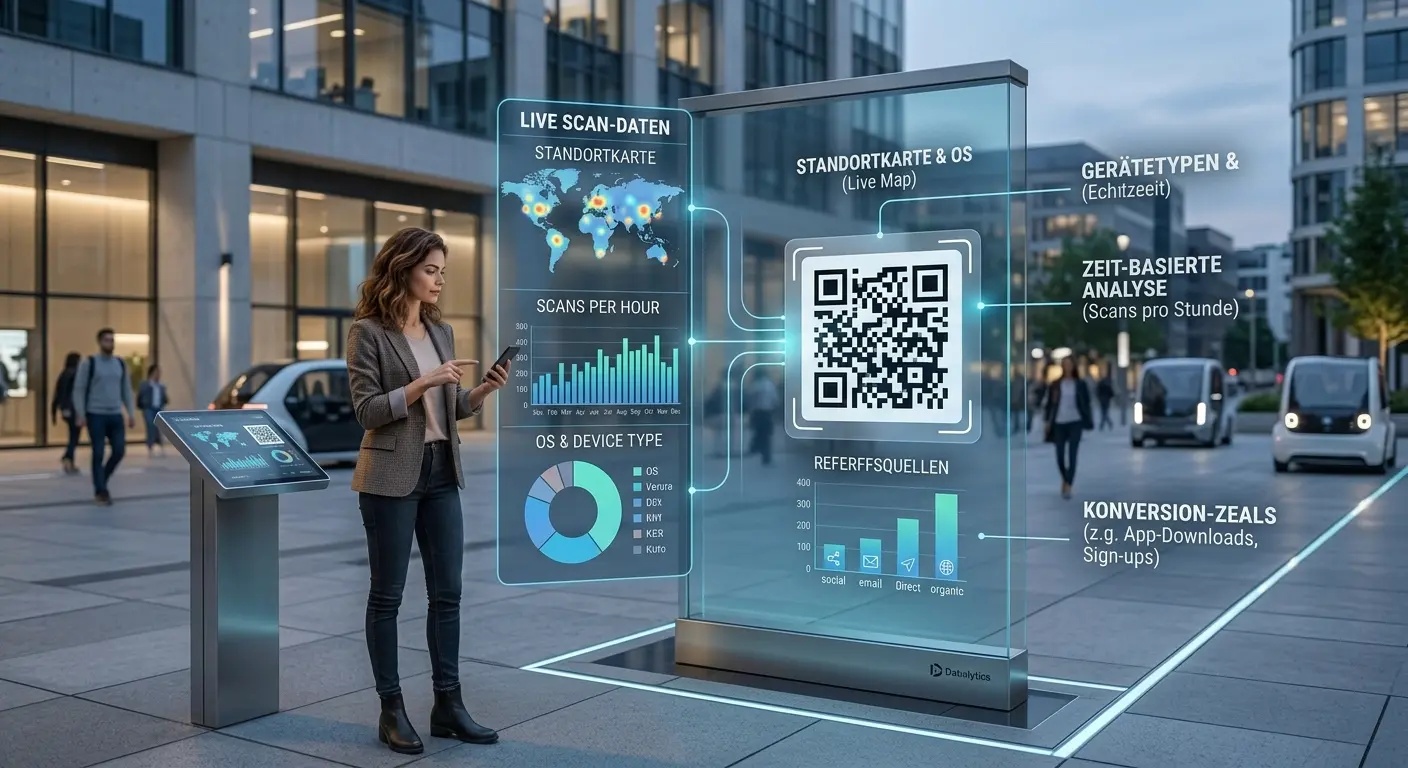
- Gain insights. A printed ad doesn’t tell you whether it was read. A QR code on it does: scans per day, per location (using a separate code for each location), per campaign. For the first time, you can see which print media actually generate responses—and which ones you can skip next time.
Six applications that pay off in practice
Packaging and instruction manuals. Instead of a 40-page manual in five languages, the product comes with a code that links to the correct language version, a video, or a parts list. If you generate the code dynamically, you can update content at any time without having to change the packaging.
Field service, workshop, construction site. A code on the device links to the data sheet, the maintenance log, or the latest inspection report. This way, the technician on site has everything on their phone and doesn’t have to call the office. With a password-protected code (free account required), internal documents truly remain internal.
Trade shows and business cards. A vCard code saves your contact information directly to the address book with a single scan—no typing, no typos, no card that disappears into a trade show bag. If the code is dynamic, it also shows you how often your card has been scanned.
Payment without a register. Whether it’s a market stall, donation box, club party, or unstaffed kiosk: a code leads directly to payment. No one needs to have change or wait in line at the register.
Reviews at the right moment. The willingness to write a review is highest immediately after a positive experience and then drops rapidly. A code on the receipt, at the exit, or on the delivery slip leads to the review page exactly when it matters most.
Make print campaigns measurable. The same offer is advertised on posters, flyers, and print ads, but each with its own unique code. After two weeks, you’ll know which medium was scanned and which wasn’t. UTM parameters on the landing page also categorize the visits in your web analytics.
What Eats Into Profits
A QR code can also waste money if it generates attention that ultimately leads nowhere.
- The destination is the homepage. Anyone who scans a product wants to see the product, not the navigation menu. Every code needs a specific destination.
- There’s nothing next to the code. A bare code doesn’t explain why someone should scan it. Just three words next to it—“Video instructions,” “Rate now,” or “Save contact”—determine whether someone will pull out their phone.
- The code is static, but the content isn’t. A static URL on 5,000 printed packages is a promise you can never change. Anything that might change belongs in a dynamic code.
- The target isn’t designed for a cell phone. However, scanning takes place 100 percent on a smartphone. An A4 landscape PDF or a page with tiny text ends the visit after two seconds.
- Printed too small, not enough contrast. A code that isn’t scanned on the first try won’t be tried a second time.
Calculate Instead of Guess
A quick calculation usually makes the decision clear. Suppose you distribute 2,000 flyers featuring a promotional page, and after three weeks the offer changes. With a static code, the remaining flyers become waste paper—meaning you’ll have to reprint, redesign, and redistribute them. With a dynamic code, you can change the destination in a minute; the flyers remain valid, and on top of that, you can see how many of them were actually scanned.
The same logic applies to support requests, which become unnecessary thanks to a well-placed set of instructions, or to reviews that, without the code at the right moment, would simply never be written. The code itself costs nothing, but the step it replaces costs money every day.
Try it now
Create your first QR code in just a few minutes using QRown’s free QR code generator—static codes without registration, dynamic codes with a free account. For scan analytics, password protection, and multiple codes per campaign, the full QR code editor is available to you with a free account.