
QR Codes in Marketing: 12 Ideas That Really Work
QR codes transform static print media into interactive marketing channels. Below, you’ll find twelve proven ideas for using QR codes, along with concrete practical tips, followed by the most important design and tracking guidelines.
12 Application Ideas with Real Added Value
1. Poster Linking to a Landing Page
A poster sparks interest; scanning the code takes users directly to the specific promotional page without having to type anything.
Pro Tip: Never use the homepage. Create a specially optimized landing page that directly addresses the poster’s promise and conveys the most important message within three seconds.
2. Packaging with Instructions or a Video
Instead of confusing package inserts, the code directly opens an explanatory video, a step-by-2. Packaging with Instructions or a Video: Instead of confusing package inserts, the code directly opens an explanatory video, a step-by-step guide, or recipe ideas.
Pro tip: Add a note such as “Quick-start guide in 60 seconds.” This significantly reduces support inquiries (FAQs) and enhances the product experience from day one.
3. Digital menu and table ordering
A single printed stand on the table is all you need—prices, daily specials, and allergen information are managed centrally online.
Pro tip: Be sure to use dynamic QR codes. This way, you won’t have to replace a single sign when switching to seasonal menus. If needed, you can also integrate an in-seat ordering system directly.
4. Business Card with vCard (Digital Address Book)
A single scan saves the name, phone number, email address, and social media links directly to the smartphone’s address book.
Pro tip: Use the vCard format (vCF 3.0/4.0). This saves the recipient from having to type the information manually and prevents typos in email addresses.
5. Storefront after closing time (24/7 storefront)
Your storefront keeps selling even at midnight—a code takes you to the online store, product reservations, or appointment booking.
Pro tip: Place the code on the window from the inside where it’s well-lit, and choose a minimum size of 10–15 cm so that passersby can easily scan it from a distance of one to two meters.
6. Event Registration, Tickets, and Program Schedules
From the poster straight to registration. The code on the event badge or ticket leads to the live program, a map of the venue, or a feedback survey.
Pro tip: Link the code on the ticket to calendar files (.ics) so participants can add the event to their digital calendar with a single click.
7. Collect Google Reviews Right on the Spot
The moment right after a purchase or visit is the best time for feedback. A code at the register or on the receipt makes it much easier for people to leave a review.
Pro tip: Don’t just link to your website—link directly to the deep link URL of your Google Reviews profile so the star rating window opens immediately.
8. Newsletter sign-up with an incentive
On flyers, receipts, or at trade show booths, the code leads to a short sign-up form.
Pro tip: Combine the sign-up with a clear lead magnet (e.g., “Scan now and get a 15% coupon for your first order!”). This boosts the conversion rate many times over compared to plain self-promotion.
9. Gain social media followers
Avoid tedious searching in social media apps. The code leads directly to your Instagram, LinkedIn, or TikTok profile.
Pro tip: Use LinkTree redirects or direct in-app links (deep links) so that the respective app opens automatically on the user’s smartphone instead of redirecting to the mobile browser.
10. Discount Coupons and Offline Vouchers
Create exclusive codes for your in-store customers (“Scan here for your 10-euro discount code”).
Pro tip: Use dynamic codes to set a time limit on the offer (creating a sense of urgency) or to automatically deactivate vouchers once a certain number of redemptions has been reached.
11. Reordering directly from the product
For consumables (e.g., coffee beans, printer cartridges, personal care products), the code takes customers directly to a pre-filled shopping cart.
Pro tip: Place the code where the product is used (e.g., on the bottom of the packaging or on the refill container) to encourage impulse purchases at the right moment.
12. Make Offline Campaigns Precisely Measurable
Connect your print media to Google Analytics or your CRM system using custom UTM parameters.
Pro tip: Print different QR codes for the same flyer at locations A and B. This way, you can see exactly which location achieves the higher return on investment (ROI).
The Four Golden Rules for High Scan Rates
- Clear call-to-action (CTA): No one scans out of sheer curiosity. Therefore, always place a call to action right next to the code (e.g., “Click here & view instructions”).
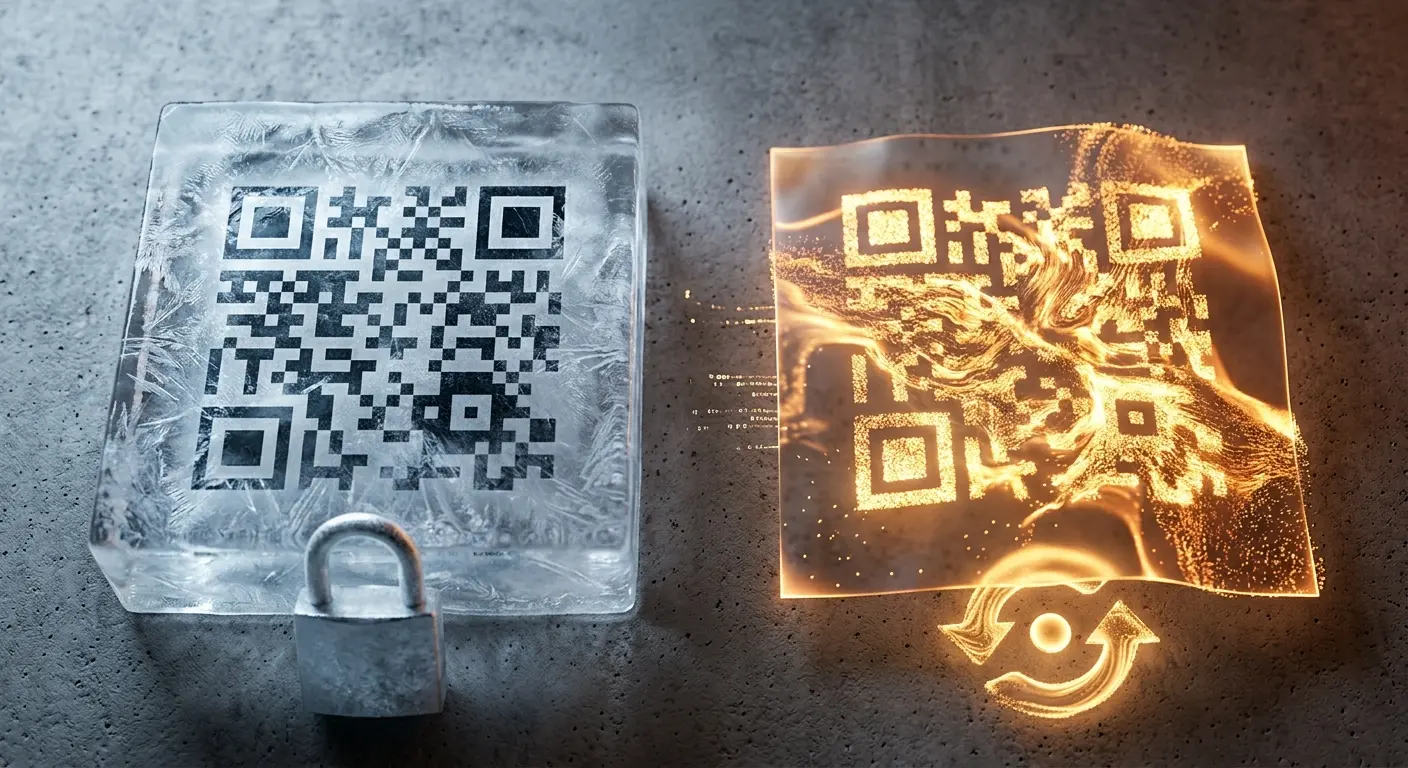
- Use dynamic QR codes: Print media doesn’t forgive printing errors. Dynamic codes allow you to update the destination URL at any time—even after the flyers have already been distributed. You’ll also receive valuable analytics data.
- Mobile-first optimization: 100% of scans are done via smartphones. The landing page must load extremely quickly, be GDPR-compliant, and not include any distracting pop-ups.
- Proper Size and Testing: Use the following rule of thumb: scanning distance divided by 10 = minimum width of the QR code. Test each code on iOS and Android under different lighting conditions before printing.
Frequently Asked Questions (FAQ):
How many scans are realistic?
In practice, average scan rates range between 1% and 5%. With a strong financial incentive (e.g., a discount) or high utility value (e.g., Wi-Fi access), rates of over 15% can also be achieved.
Do I need a separate code for each print run?
For accurate attribution in marketing: Yes. For example, if you distribute 1,000 flyers in City A and 1,000 flyers in City B, only a separate code will provide you with the information on which market is performing better.
Should QR codes be included in emails or banners?
No, clickable links should always be used on digital screens, since the medium is usually already being viewed on a smartphone or desktop. QR codes bridge the gap between analog and digital.
Launch your next campaign and turn your printed materials into measurable digital sales channels. Create your first dynamic QR code in just a few steps and keep track of all your analytics data.